Research
Our lab studies the embryonic development of vertebrates. We focus on the development of somites, transient embryonic structures that give rise to much of the musculoskeletal system, and their derivatives. Our work addresses basic questions about the mechanisms of embryonic development shared across all vertebrates, including humans, as well as mechanisms of morphological evolution.
Our major areas of research are described below.
1. Targets and tissue-specificity of the HOXA5 transcription factor
The Hox transcription factors are textbook examples of developmental control genes, and understanding their roles is critical to understanding both animal development and human disease. Hox genes were first discovered in the fruit fly model, due to their dramatic loss-of-function phenotypes where one body part develops in place of another. Hox transcription factors play central roles in the development of body pattern in nearly all animal species, including humans. Postnatally, Hox proteins can play both pro- and anti-oncogenic roles.
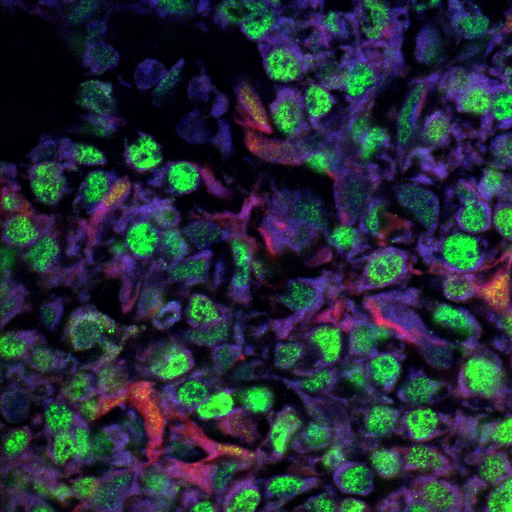
Our lab studies the cellular and molecular mechanisms of Hoxa5 patterning activity, primarily in the mouse model system. Our work with Hoxa5 has led us to the additional research projects listed below.
Related References

Frenette, B., Guéno, J., Houde, N., Landry-Truchon, K., Giguère, A., Ashok, T., Ryckman, A., Morton, B., Mansfield, J.H. and L. Jeannotte. 2024.  Loss of Hoxa5 function affects Hox gene expression in different biological contexts. Scientific Reports 14 (1): 30903.

Mitchel, K., Bergmann, J.M., Brent, A.E., Finkelstein, T.M., Schindler, K.A., Holzman, M.A., Jeannotte, L., and J.H. Mansfield. 2022. Hoxa5 activity across the lateral somitic frontier regulates development of the mouse sternum. Frontiers in Cell and Developmental Biology 10: 806545.

Holzman, M.A., Ryckman, A., Finkelstein, K.M., Landry-Truchon, K., Schindler, K.A., Bergmann, J.M., Jeannote, L. and J.H. Mansfield. 2021. HOXA5 Participates in Brown Adipose Tissue and Epaxial Skeletal Muscle Patterning and in Brown Adipocyte Differentiation. Frontiers in Cell and Developmental Biology 9: 632303.

Holzman, M.A., Bergmann, J.M., Feldman, M., Landry-Truchon, K., Jeannotte, L., Mansfield, J.H. 2018. HOXA5 protein expression and genetic fate mapping show lineage restriction in the developing musculoskeletal system. International Journal of Developmental Biology 62: 785796.

Landry-Truchon, K, Houde N, Boucherat O, Joncas FH, Dasen JS, Philippidou P, Mansfield JH, Jeannotte L. 2017. Hoxa5 plays tissue-specific roles in the developing respiratory system. Development. 144:3547-3561.

Chen, J. W., Zahid, S., Shilts, M.H., Weaver, S., Leskowitz, R.M., Habbsa, S., Aronowitz, D., Rokins, K.P., Chang, Y., Pinnella, Z., Holloway, L. and J.H. Mansfield. 2013. Hoxa-5 acts in segmented somites to regulate cervical vertebral morphology. Mechanisms of Development 130(4-5):226-40.

Mansfield, J.H. and A. Abzhanov. 2010. Hox expression in the American alligator and evolution of archosaurian axial patterning. Journal of Experimental Zoology (Molecular and Developmental Evolution), 314B(8): 629-44.
2. Skeletal development and evolution
Mineralized skeletal tissue is a novelty of vertebrates, and together with cartilage, skeletal muscle and connective tissue comprises the musculoskeletal system. Our lab has worked to characterize the evolutionary origin of post-cranial skeletal tissues through comparative work on somites of the invertebrate chordate Amphioxus.
We also study the development and evolution of the mammalian sternum, a skeletal structure that protects the thoracic organs, helps to transfer body weight from the forelimbs to the spinal column, and facilitates diaphragm-based breathing. We are investigating mechanisms of sternum development and evolution, including the role of Hoxa5.
Related References

Brent, A.E., Buchholtz, E.A. and J.H. Mansfield. 2023. Evolutionary assembly and disassembly of the mammalian sternum. Current Biology 33: 197-205.

Mitchel, K., Bergmann, J.M., Brent, A.E., Finkelstein, T.M., Schindler, K.A., Holzman, M.A., Jeannotte, L., and J.H. Mansfield. 2022. Hoxa5 activity across the lateral somitic frontier regulates development of the mouse sternum. Frontiers in Cell and Developmental Biology 10: 806545.

Mansfield, J. H., E. Haller, N.D. Holland and A.E. Brent. 2015. Development of somites and their derivatives in amphioxus, and implications for the evolution of vertebrate somites. EvoDevo 6: 21.
3. Brown adipose tissue development
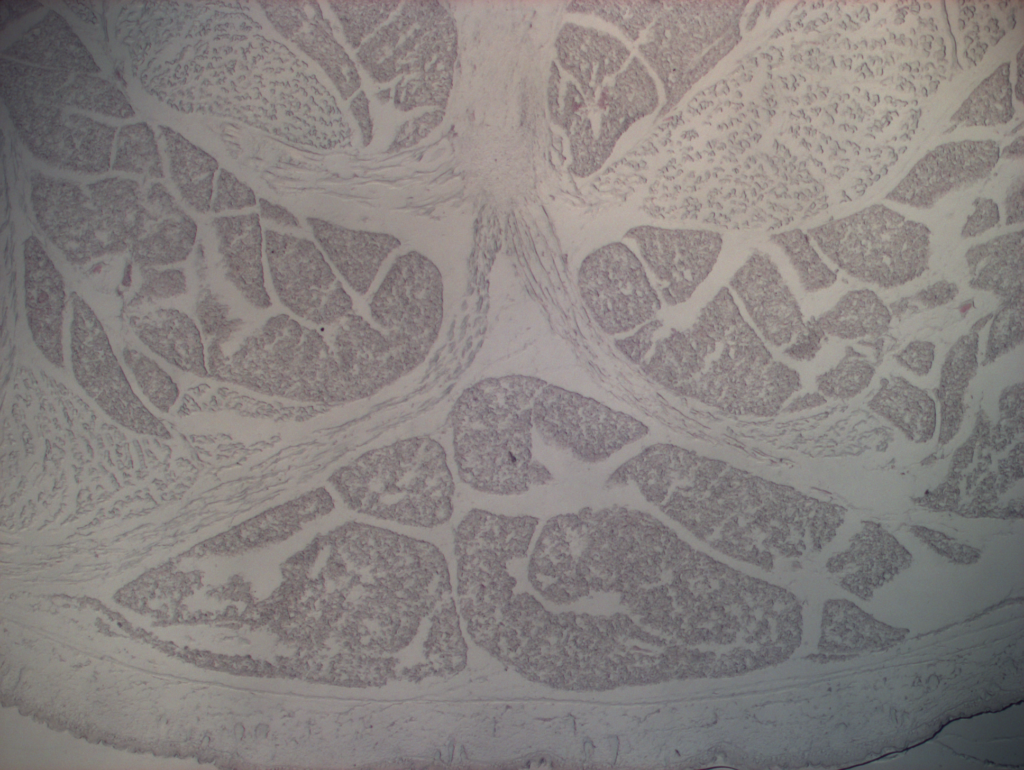
Brown adipose tissue is a thermogenic, or heat-generating tissue that evolved in mammals and helps to regulate body temperature in most species, including human infants. Brown adipose tissue also plays metabolic roles in humans and other species and contributes to many interesting physiological features of mammals, including the ability to fight infections with fever and to hibernate.
The major brown adipose tissue depots are derived from somites. Our lab seeks to characterize early development of these depots, and to understand how the somites of mammals evolved to produce a novel cell type, the brown adipoctye.
Related Reference

Holzman, M.A., Ryckman, A., Finkelstein, K.M., Landry-Truchon, K., Schindler, K.A., Bergmann, J.M., Jeannote, L. and J.H. Mansfield. 2021. HOXA5 Participates in Brown Adipose Tissue and Epaxial Skeletal Muscle Patterning and in Brown Adipocyte Differentiation. Frontiers in Cell and Developmental Biology 9: 632303.